



Doing business with the poor
Results are sorted by date modified.
- All results (1252)
- Resources (66)
- Standards (2)
- Organisations (1000)
- Stories (159)
- Guidelines (4)
- Videos (21)
Fairtrade hopes for Cadbury cocoa farmers in Ghana

Cadbury Cocoa Partnership scheme tries to help the farmers who provide the company with its raw material.
VisionSpring creates a new method of distributing reading glasses in India and other developing countries

This video introduces VisionSpring, a project jointly implemented by the SCOJO Foundation, Goldman Sachs, and various other groups in the private sector.
Computer for Schools Kenya

Computers for Schools Kenya (CFSK), is a non-profit organization established in October 2002 with the vision of establishing an information-rich Kenyan society actively contributing to sustainable national development. CFSK seeks to empower youths and communities for life in a knowledge-based...
Starbucks and Fair Trade NGOs partner

Starbucks, TransFair USA and Fairtrade Labelling Organizations International join in support of small-scale coffee farmers through a $20 million loan program.
Tate & Lyle and Fairtrade sugar farming in Belize

This video shows a number of sugar farmers in Belize speaking about their problems following a recent hurricane and welcoming the announcement by Tate and Lyle that sugar production will, in future, be in accordance with Fair Trade standards.
Cemex makes home improvements accessible for the poor in Mexican slums

Construmex is one of CEMEX's vanguard social initiatives. It was launched following the company's experience resulting from Patrimonio Hoy, a preceding low-income market and socially minded business initiative. Since its inception in 2001, Construmex has helped more than 14,000 Mexican migrants in...
Better Factories Cambodia partnership creates industry standards

Many women in Cambodia risk losing their jobs when they become pregnant. But most textile factories monitored by the ILO's Better Factories Cambodia programme now offer maternity protection to their employees.
WIZZIT reaching the Unbanked of South Africa

It is estimated that 40 percent of South Africa's 45 million population are un-banked or under-banked. However, nearly 60 percent of South Africans have mobile phones. The proliferation of mobile services worldwide has created a unique opportunity to provide social and financial services over the...
Starbucks join the Conservation movement

Conservation International has worked with Starbucks Coffee Company for more than 14 years to promote coffee production practices that conserve biodiversity, maintain healthy ecosystems and support economic and social development in coffee production landscapes as embodied in the company’s...
Construmex: Facilitating Remote Housing Investments for US-based Mexican Migrants
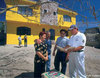
Construmex, an initiative of Mexican construction and building giant CEMEX, was launched after the company’s success with Patrimonio Hoy, a socially minded business initiative targeted at low-income consumers. Since its inception in 2001, Construmex has helped more than 14,000 Mexican migrants in...
Rajawali’s Express Taxi: Working with Taxi Drivers as Business Partners in Indonesia

The 1997 Asian financial crisis created a job vacuum in Indonesia, with companies forced to lay off 1.4 million workers. A decade later, unemployment rates continue to rise and poverty defines the context for Indonesia’s economy, social relations and security. Express Taxi, a subsidiary of the...
Sustainable Cashew Production in Guinea

Guinea grows about 5,000 tons of raw cashew nuts a year. Meanwhile, its much smaller neighbour Guinea-Bissau, with similar soil and climate, produces 80,000 tons. Encouraged by the growing consumer demand for cashews, Guinea has begun to focus on expanding cashew production—a good candidate for...
UNILAB supports Governments campaign to make medicine accessible to the poor

The market price of medicines in the Philippines is among the highest in the world—40%–70% more than in neighbouring countries, according to the Philippine Department of Health. Some drugs cost 10 times more in the Philippines than in neighbouring countries.
Partnerships bring fuel services to northern Mozambique medical clinics
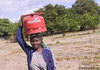
In a country with 500 doctors for almost 20 million people, initiatives that can expand the reach of health services to rural people are in critical demand but in short supply. In northern Mozambique, the big challenge for health clinics is the lack of reliable fuel to light medical operations and...
Integrated Tamale Fruit Company: Organic Mangoes Improving Livelihoods for the Poor in Ghana

The Integrated Tamale Fruit Company—operating in the Savelugu-Nanton District in Ghana’s Northern Region, an area of widespread poverty—cultivates certified organic mangos for local and export markets. To boost its power in the export market with higher production volumes, the company established a...
Vodafone and Safaricom Kenya: Extending the Range and Reliability of Financial Services to the Poor in Rural Kenya

Kenya has fewer than 2 million bank accounts serving 32 million people. To bridge the gap, Safaricom Kenya, one of two mobile service providers in Kenya, developed a technological solution in partnership with Vodafone. The result was MPESA, an electronic money transfer product to make financial...
PETSTAR: Adding Value to the Chain of Recycling While Improving the Scavengers’ Working Conditions

With about 85,000 tons of waste generated every day, Mexico is the 10th largest garbage producer in the world. At the same time, tens of thousands of scavengers, including children, are making a living by collecting saleable items from open-air dumps in very poor, informal conditions.
Amanco: Providing Irrigation Systems to the Rural Poor

For decades, small farmers in Latin America have faced a grim outlook: low productivity and inefficiency. That was the background for the decision of Amanco, a subsidiary of the conglomerate GrupoNueva, to develop a hybrid value chain model for serving low-income markets. As part of that plan, the...
Danone Poland: Affordable Milk Porridge for Low-Income Families

In 2006 Danone Poland launched a breakfast product which has a high nutritional value for children and is affordable for low-income consumers. A milk porridge product based on semolina and milk. Milk Start is enriched with vitamins and minerals. To make the initiative financially sustainable,...
Votorantim Celulose e Papel (VCP) in Brazil: Planting eucalyptus in partnership with the rural poor

Brazil suffers from high income inequality and widespread poverty, especially in rural areas. Despite recent policies to support rural settlements through land reform, a mismatch remains between the rural population’s social demands and the state’s capacity to respond.